Future Students
Study Biological Sciences at UMD
Future Students
Experience a rigorous, comprehensive biology curriculum at Maryland designed to sharpen your analytical skills, deepen your expertise and prepare you for a high-impact career in healthcare, research or industry.
What Students Learn
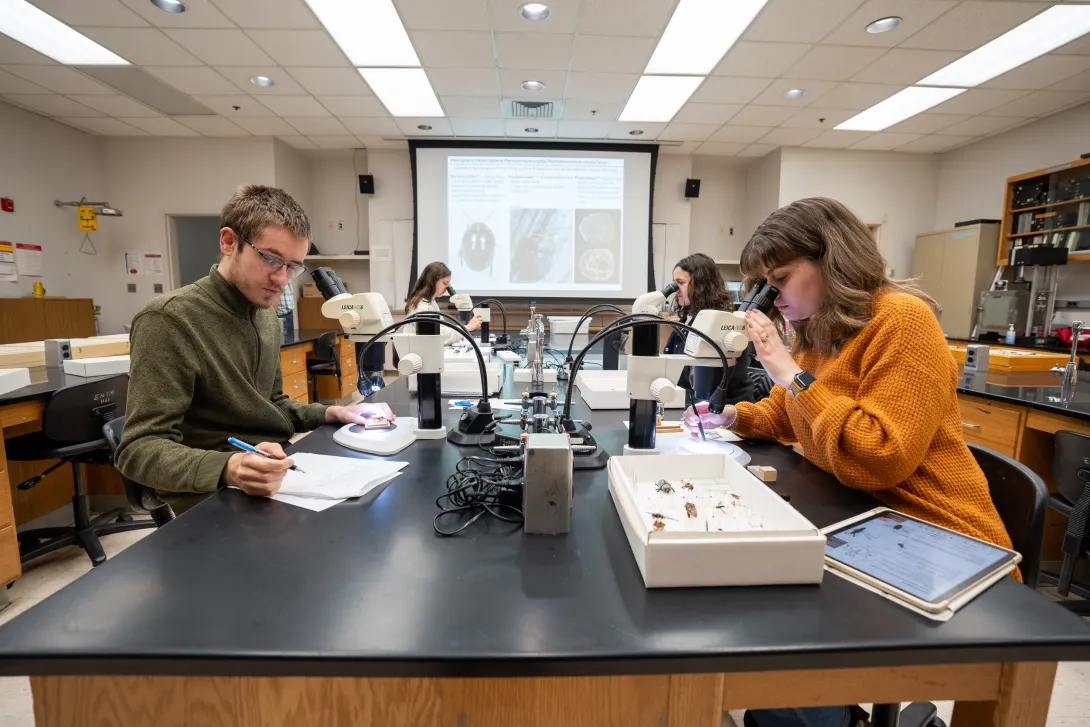
Modern biology is an experimental science: Scientists ask questions about the natural world and then design experiments to find answers. Biological sciences majors learn the applications of biology across several levels: molecules, cells, organisms and ecosystems.
UMD's biological sciences curricula integrate mathematical, physical and chemical concepts to understand how living organisms work, with mechanistic and quantitative reasoning emphasized at each level.
Through undergraduate research, students learn modern experimental techniques while working on projects that examine real-world challenges. Students graduate prepared for diverse careers in research, education, conservation, healthcare, policy, science communication and advocacy.
Skills Students Develop
Through coursework and co-curricular experiential learning, the University of Maryland prepares each student to:
- Define a research question and design an experiment to answer it effectively.
- Gather and analyze data to see relationships among different factors and draw meaningful conclusions.
- Apply appropriate mathematical calculations and modeling to scientific problems.
- Communicate via research proposals, journal papers and oral presentations.
- Collaborate efficiently and productively with other researchers.
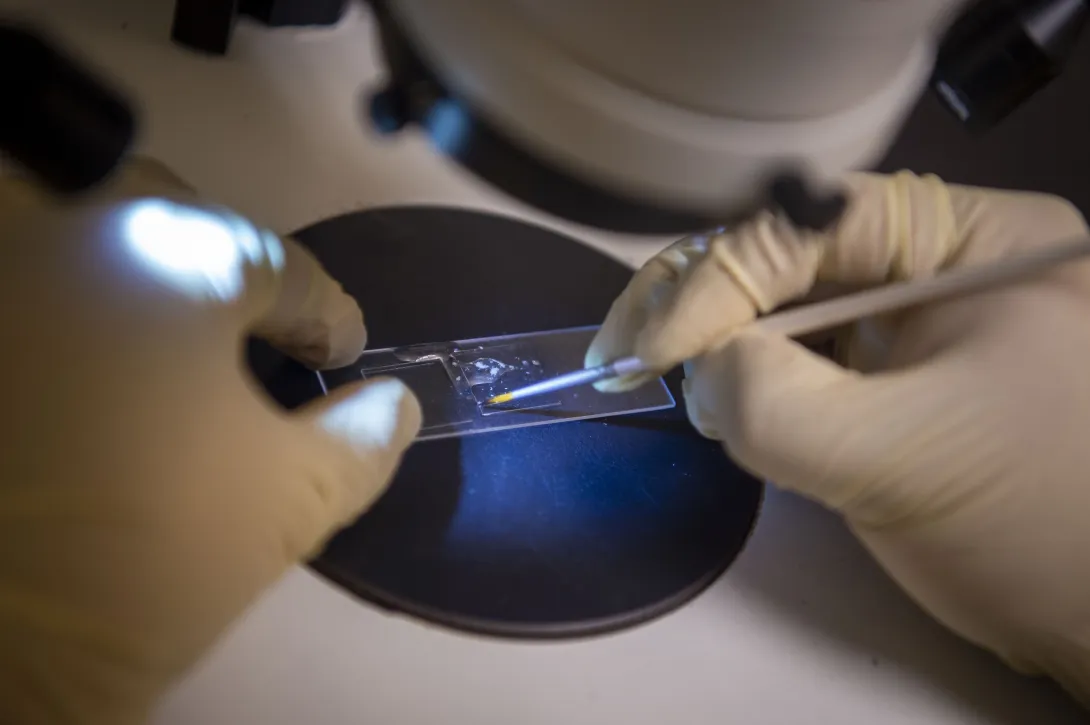
- Master computers and other technology—centrifuges, microscopes, spectrophotometers and more.

All the faculty I’ve met at UMD and all of my friends have been amazing. I would go to Maryland a hundred times over if I could.
Kaavya Suresh
B.S. ’26, biological sciences